


If you think you don't like beets, try them roasted. Roasting brings out their natural sweetness and gives them a softer, deeper flavor than boiled beets. This roasted beet salad is one of my favorite ways to serve them: warm or at room temperature, tossed with a honey and red wine vinegar dressing and finished with walnuts and blue cheese.
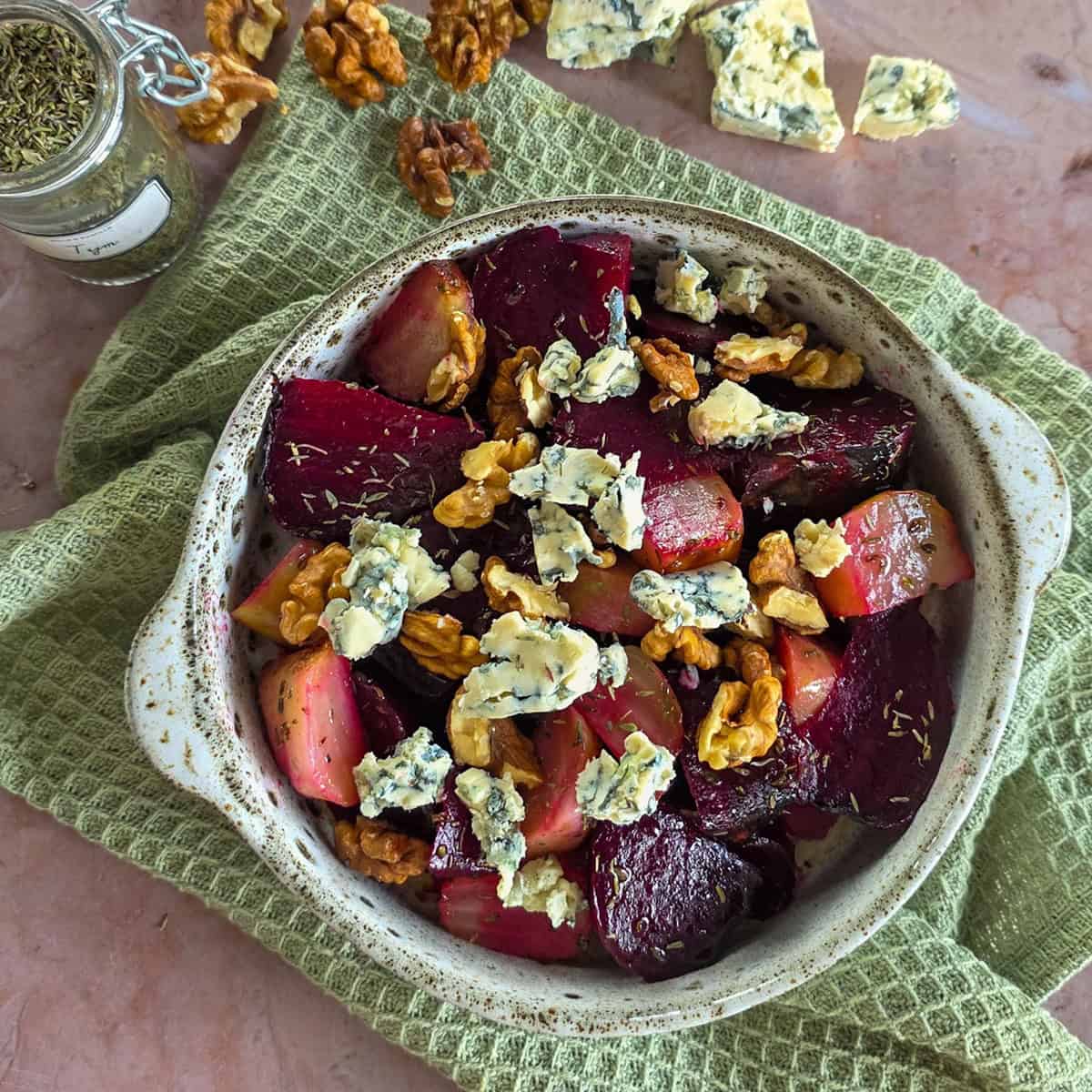
I used to be unsure about beets myself. They can have a very earthy flavor, especially when they are not well seasoned. But once I started roasting them, I completely changed my mind. I grow beets in my vegetable garden during the summer, and this roasted beet salad has become one of my favorite ways to use them.
The best part is that the recipe is flexible. You can serve the roasted beets on their own as a side dish, turn them into a salad with blue cheese and walnuts, or roast a few extra and use them in lunches throughout the week.
Why roast beets instead of boiling them?
Roasting beets whole in foil is my favorite method because it concentrates their natural flavor while keeping them moist. The foil traps steam released by the beets, helping them become tender without drying out.
There is also one important change I recommend: don't peel the beets before roasting.
The skin is much easier to remove once the beets are cooked. Let them cool until you can handle them, then rub the skin away with your fingers, a paper towel, or a clean kitchen towel. Wearing food-safe gloves is useful if you want to avoid pink hands. Roasting beets unpeeled is also less messy because you don't have to handle raw, slippery beetroot before it goes into the oven. This is a common recommendation among professional cooking sources and experienced home cooks.
The secret to a roasted beet salad that doesn't taste too earthy
Beets naturally have an earthy flavor. That's not necessarily a problem, but the right combination of flavors makes a big difference.
I like to pair roasted beets with three things:
- Acidity: red wine vinegar cuts through the sweetness and earthy flavor.
- Sweetness: a little honey makes the dressing work with the natural sweetness of the beets.
- Salt and richness: blue cheese and walnuts add salty, creamy and crunchy elements.
This balance is particularly useful if you've previously made beets that tasted a little too much like soil. Bright, acidic ingredients are often recommended to balance the earthy character of beets.
Ingredients for roasted beet salad
You only need a handful of ingredients for this recipe.
Beets are the base of the salad. Look for firm, fresh beets that feel heavy for their size. If possible, choose beets that are similar in size so they finish cooking at roughly the same time.
Olive oil adds flavor and helps the seasonings stick to the beets while they roast. You don't need much because the foil packet keeps the beets moist.
Fresh thyme adds an herbal note that works particularly well with earthy vegetables. Rosemary is a good substitute if that's what you have.
Honey gives the dressing enough sweetness to balance the vinegar and blue cheese. Maple syrup works just as well if you prefer.
Red wine vinegar provides the acidity the beets need. Balsamic vinegar is a good alternative if you want a slightly sweeter dressing. Apple cider vinegar also works.
Walnuts add crunch and a slightly bitter, nutty flavor that balances the sweet beets. Pecans are an easy substitute.
Blue cheese adds saltiness and richness. I love the contrast between the sweet roasted beets and the strong cheese. If blue cheese isn't your favorite, use goat cheese or feta instead.
Should you peel beets before roasting?
No. For whole roasted beets, I recommend leaving the skin on.
Wash the beets well and trim off the leaves and any long roots, but don't peel them. After roasting, allow them to cool for 10 to 15 minutes. The skin should then rub off quite easily.
This also solves one of the most annoying parts of working with beets: the mess. Raw beets can stain your hands, cutting board and countertops. If you do need to cut them while they're raw, use a cutting board that you don't mind staining and clean it promptly.
If you bought beets with their greens still attached, don't throw the greens away. Young beet greens can be cooked like spinach or added to another salad.
How long do you roast beets?
The answer depends much more on the size of the beets than on the exact cooking time.
At 400°F, medium beets usually take around 60 to 75 minutes, but large beets can take considerably longer. Some recipes use temperatures from 350°F to 450°F, with cooking times ranging from roughly 45 minutes to 1½ hours.
That's why I don't recommend relying on the clock alone.
After about an hour, carefully open one foil packet and insert a thin knife into the center of the largest beet. It should slide in easily, with little resistance. If the center still feels firm, wrap it back up and continue roasting.
What if your beets are different sizes?
This is very common when you grow your own beets or buy them loose.
If you have small and large beets, don't assume they'll all be ready at the same time. Check the smaller ones first and remove them when they're tender. Keep the larger ones in the oven until they're done.
You can also group beets of similar size into the same foil packet. That makes it easier to remove individual packets as they finish.
How to roast beets on the grill
You can also make these roasted beets on a gas or charcoal grill.
Prepare the beets in exactly the same way: wash them, leave the skin on, rub them with olive oil, season with salt, pepper and thyme, and wrap each beet tightly in foil.
Place the packets on the grill and cook over medium heat, turning them occasionally if necessary. Start checking them after about 45 to 60 minutes. Cooking time will depend on the size of the beets and how hot your grill is.
Be careful when opening the foil. Hot steam can escape from the packet.
How to turn roasted beets into a festive side dish

The roasted beets are delicious by themselves, but I especially like them with walnuts and blue cheese.
Once the beets are tender and peeled, cut them into wedges and toss them with the honey-vinegar dressing while they're still slightly warm. Warm beets absorb the dressing particularly well.
Then transfer them to a serving platter and scatter the walnuts and blue cheese over the top.
For a holiday dinner, this makes a colorful festive side dish that can be served alongside roast chicken, beef, pork or a vegetarian main course. It also works well on a buffet because you don't have to serve it piping hot.
If you're putting together a holiday table, you could serve this alongside my Maple Glazed Pumpkin. The sweetness of the pumpkin works nicely with the earthy beets.
For another festive salad, try my Fig and Burrata Salad. It's a completely different combination of flavors, but both salads work well on a holiday table.
Make roasted beets ahead
This is one of the reasons I like roasting extra beets.
You can roast the beets a day or two before you need them, let them cool, peel them and store them in an airtight container in the refrigerator. Keep the dressing separate if you want to prepare the salad ahead of time.
For the best texture, bring the beets back to room temperature before serving. You can also serve them slightly warm.
I wouldn't assemble the complete salad too far in advance. The blue cheese and walnuts are best added shortly before serving so the walnuts stay crunchy.
Can you freeze roasted beets?
Yes. Freeze the roasted beets without the dressing, walnuts or blue cheese.
Let the cooked beets cool completely, cut them into wedges or cubes, and freeze them in an airtight container or freezer bag. Thaw them in the refrigerator and drain off any excess moisture before using.
The texture can become a little softer after freezing, so I prefer using thawed roasted beets in salads, grain bowls or warm dishes rather than serving them as the centerpiece of a salad.
More ways to use roasted beets
Once you have a container of roasted beets in the refrigerator, there are plenty of ways to use them.
Add them to a quinoa or grain bowl with feta and toasted nuts. Slice them over greens with goat cheese and a sharp vinaigrette. Add them to a lunch salad with smoked salmon, or simply serve them as a side dish with a little olive oil, salt and fresh herbs.
You can also make the basic roasted beets without the dressing and decide later how you want to use them. That's my favorite approach when I have a lot of beets from the garden.
Frequently Asked Questions
Yes. You can roast whole beets in a covered roasting dish or roast peeled, cubed beets directly on a sheet pan. Foil is particularly useful for whole beets because it traps steam and helps them cook evenly without drying out.
The most likely reason is their size. Large beets can take significantly longer than small or medium beets. Don't rely on a fixed cooking time. Test the center with a thin knife and continue roasting until there is little resistance.
Yes. Roast and peel the beets up to 2 days ahead and refrigerate them in an airtight container. Make the dressing separately. For the best texture, add the walnuts and blue cheese just before serving.

Roasted Beet Salad with Blue Cheese and Walnuts
Equipment
- Baking sheet
- Aluminum foil
- vegetable peeler (optional)
- small bowl
- Sharp knife
Ingredients
For the roasted beets
- 4 medium red beets
- 4 teaspoon olive oil
- 2 teaspoon fresh thyme leaves , or 4 sprigs fresh thyme
- Salt and freshly ground black pepper,
For the dressing
- 2 tablespoon extra-virgin olive oil
- 1 tablespoon honey
- 1 teaspoon red wine vinegar
- 1 teaspoon fresh thyme leaves
- Salt and freshly ground black pepper, to taste
Toppings
- ⅓ cup walnuts (roughly chopped)
- 1½ ounces blue cheese crumbled or cut into small pieces
Instructions
- Preheat your oven to 400°F.
- Wash 4 medium red beets thoroughly and trim away the leaves and long roots. Do not peel them. Pat them dry.
- Place each beet on a piece of aluminum foil. Rub with 4 tsp olive oil and season with 2 tsp fresh thyme leaves, Salt and freshly ground black pepper,. Wrap each beet in foil, making sure the packet is well sealed.
- Place the foil packets on a baking sheet and roast for about 60 to 90 minutes, depending on their size. Start checking after 1 hour. A thin knife should slide easily into the center of the largest beet when it is done.
- Carefully open the foil packets and let the beets cool for 10 to 15 minutes, until they are cool enough to handle. Rub off the skins using your fingers or a paper towel. Food-safe gloves can help prevent stained hands.
- Whisk together 2 tbsp extra-virgin olive oil, 1 tbsp honey, 1 tsp red wine vinegar and 1 tsp fresh thyme leaves. Season with Salt and freshly ground black pepper, to taste
- Cut the peeled beets into wedges. While they're still slightly warm, toss them gently with the dressing. Taste and add more salt, honey or vinegar if needed.
- Transfer the dressed beets to a serving platter. Scatter ⅓ cup walnuts (roughly chopped) and 1½ ounces blue cheese (crumbled) over the top and serve.
Video
Notes
- Different-sized beets: Small beets may be ready before large ones. Remove them as soon as they're tender rather than waiting for all the beets to finish at once.
- Make ahead: Roast and peel the beets up to 2 days ahead. Store them in an airtight container in the refrigerator and add the dressing, walnuts and blue cheese shortly before serving.


Leave a Reply